Coffee and Physical Performance: What Is Driven by Caffeine and What Is Not
Study Details
This narrative review examined what drives coffee’s effects on exercise performance, separating well-established caffeine-mediated effects from the more speculative influence of other coffee compounds 🔍
Here are the key findings ⬇️
Key Findings
☕ Caffeine exposure is the primary mechanism underpinning coffee’s acute ergogenic effects
🧠 Caffeine antagonises adenosine receptors in the central nervous system, increasing alertness and vigilance
💪 Peripheral effects may also enhance muscle contraction and increase pain tolerance during demanding exercise
🏃 These mechanisms can improve endurance performance, fatigue tolerance, pacing and decision-making
📈 The evidence for caffeine-mediated acute performance benefits is substantially stronger than for coffee’s non-caffeine components
🧬 Genetic variability, particularly CYP1A2 and ADORA2A, may modify caffeine metabolism and responsiveness
🔄 Habitual caffeine intake may influence individual responses, although tolerance does not necessarily eliminate ergogenic effects
⏰ Circadian rhythm, chronotype and the timing of coffee intake can also influence performance and sleep responses
🏋️ Training status may further contribute to differences between individuals
🌿 Coffee also provides several non-caffeine bioactive compounds, but evidence for direct performance effects is much weaker
🫐 Polyphenols, particularly chlorogenic acids, may influence oxidative stress and inflammation
🫘 Diterpenes such as cafestol and kahweol may affect metabolic signalling and glucose handling, although evidence is largely indirect
🧠 Trigonelline may have neuro-metabolic effects, but athlete-specific evidence remains limited
🦠 Melanoidins may interact with the gut microbiota, with potential implications for longer-term adaptation remaining hypothetical
🧂 Minerals and other minor compounds are likely to make only a marginal contribution
🔀 Caffeine and non-caffeine components may interact through effects on fatigue perception, recovery quality, sleep and the overall training environment
Conclusion
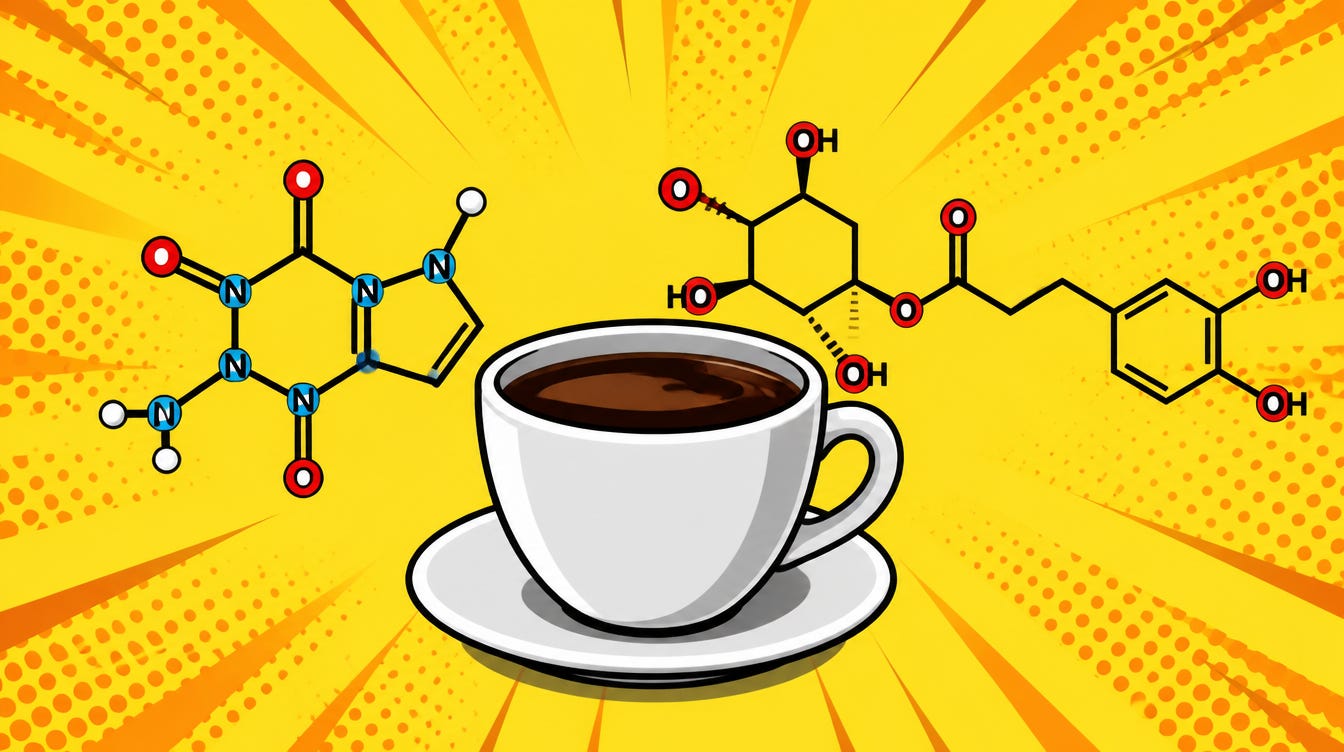
Coffee should therefore be viewed primarily as a caffeine-delivery vehicle for acute performance, with possible additional effects from its wider bioactive matrix ☕️
Reference
https://pubmed.ncbi.nlm.nih.gov/42654270/
Performance Nutrition Digest is powered by Healthspan Elite ⚡️
Healthspan Elite is a science-led sports nutrition range developed in collaboration with leading experts to support athletic performance, recovery, and health.
Use code: TCDIGEST25 for 25% off at https://www.healthspanelite.co.uk/ 💪