


Gastrointestinal temperature of elite and recreational adult runners during a 100-mile ultramarathon under heat exposure

Study Details
This field study continuously tracked gastrointestinal temperature during the 2025 Western States 100-mile ultramarathon in 23 finishers, including elite and recreational runners 🔍
Here are the key findings ⬇️
Key Findings
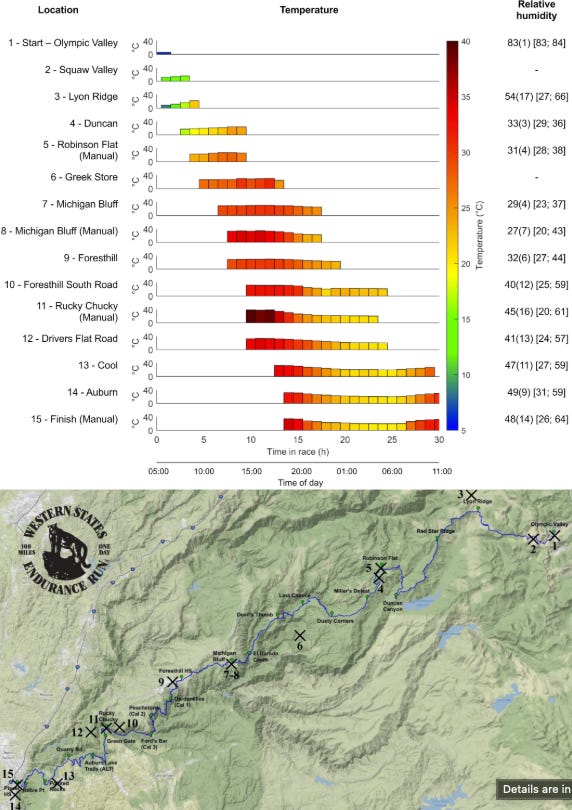
🌡️ Peak gastrointestinal temperature averaged 38.90°C, despite ambient temperatures ranging from ~5°C to 39.6°C
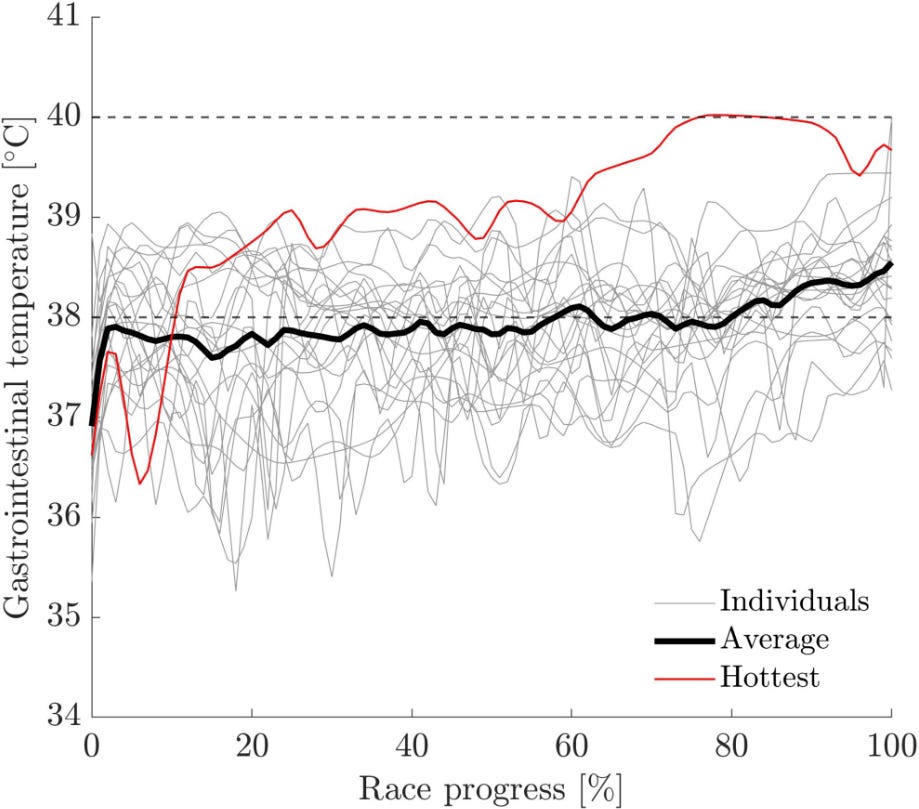
🔥 9 of 23 runners (39%) exceeded 39°C during the race
🚨 Only 2 runners exceeded 40°C, and just one remained above 40°C for more than 10 minutes
🏃 Faster finishers reached significantly higher peak temperatures, with peak TGI associated with shorter finishing time
🏆 The two hottest runners both finished within ~19 hours and placed inside the top 20
⚡ Higher running intensity and greater metabolic heat production likely contributed to the greater thermal strain in faster athletes
☀️ Elite runners also reached some of the hottest sections of the course during peak daytime temperatures, increasing environmental heat exposure
📈 Across the race, gastrointestinal temperature increased by ~0.16°C for every 10°C rise in ambient temperature
🏁 7 of 23 runners (30%) reached peak temperature during the final 2% of the race
⛰️ However, 6 runners peaked during the first 25%, highlighting the importance of course profile and exercise intensity rather than ambient temperature alone
💧 Body mass changed by an average of −1.8%, ranging from −7.4% to +6.4%
↔️ Body mass change was not associated with peak temperature or finishing time
🧊 The relatively modest temperatures despite extreme heat may partly reflect lower ultra-running intensities alongside widespread heat acclimation, pacing and cooling strategies
Conclusion
Hyperthermia risk during ultras may therefore be greatest during high-intensity sections and late-race surges, rather than simply after prolonged exposure to heat 🔍
Faster athletes racing hot ultras should prioritise cooling and pacing around the hottest, hardest sections and maintain cooling opportunities late in the race, especially before a finishing push; body mass change alone should not be used to judge thermal strain ✅
Reference
https://pubmed.ncbi.nlm.nih.gov/42693486/

Performance Nutrition Digest is powered by Healthspan Elite ⚡️
Healthspan Elite is a science-led sports nutrition range developed in collaboration with leading experts to support athletic performance, recovery, and health.
Use code: TCDIGEST25 for 25% off at https://www.healthspanelite.co.uk/ 💪