


Gut Microbiota in Athletes: Implications for Physical Performance and Recovery
Study Details
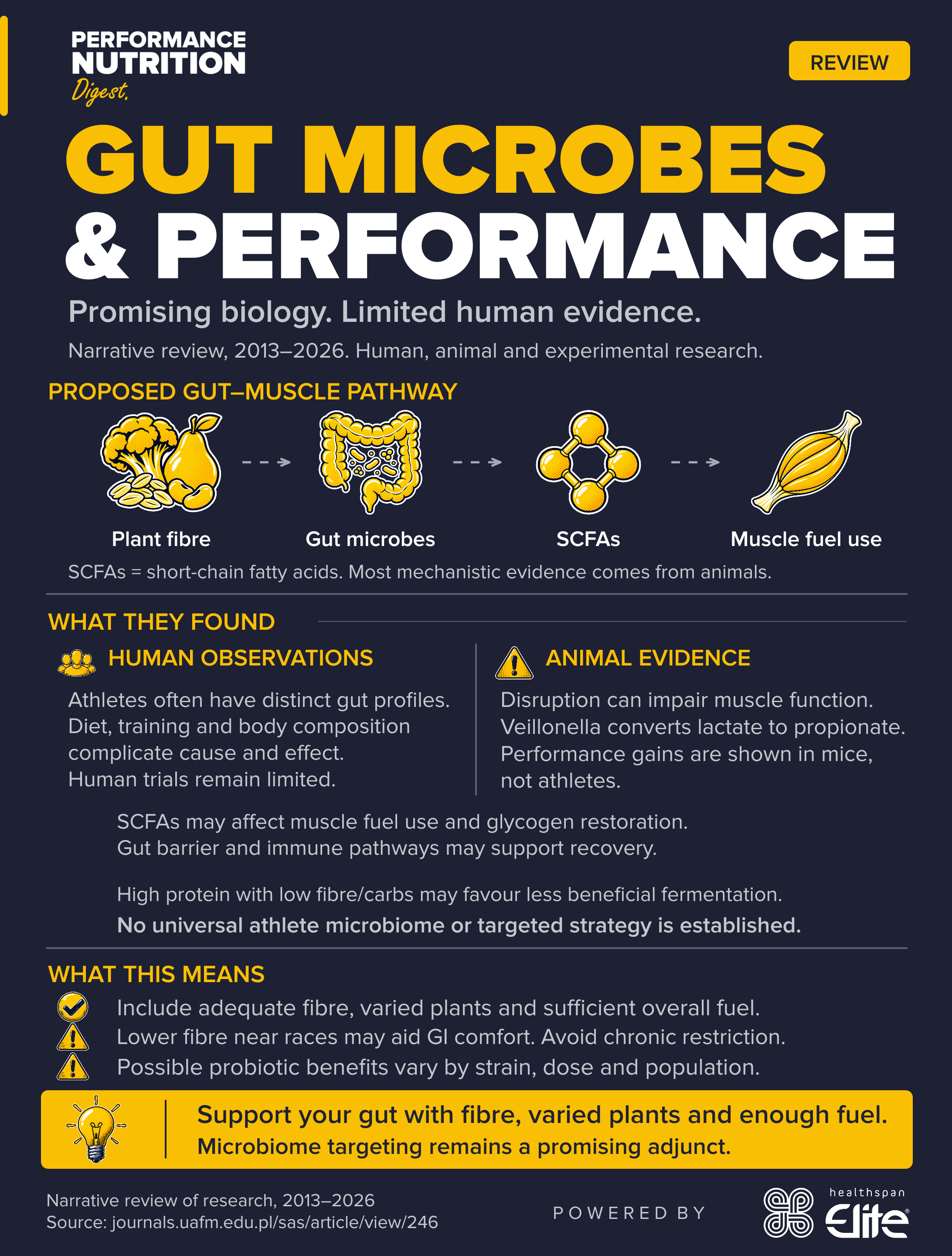
This narrative review examined research from 2013–2026 on the gut microbiota, exercise performance and recovery, including human, animal and experimental studies 🔍
Key findings ⬇️
Key Findings
🏃 Athletes often show greater microbial diversity and distinct gut profiles compared with sedentary individuals, although diet, training load and body composition make causality difficult to establish
🧬 Short-chain fatty acids (SCFAs), particularly acetate, propionate and butyrate, may influence skeletal muscle metabolism through pathways involving AMPK, GLUT4, glucose uptake and glycogen resynthesis
⚡ Animal studies show that disrupting the gut microbiota can reduce muscle glycogen, strength and endurance capacity, while restoring microbial function can reverse some of these effects
🏃♂️ Veillonella increased after marathon running and can convert lactate into propionate, but the performance-enhancing effect has so far been demonstrated in mice rather than athletes
🥦 Fibre appears particularly important for supporting SCFA-producing bacteria and may help offset potentially unfavourable microbiota changes associated with very high-protein diets
🥩 High protein intake combined with low fibre/carbohydrate availability may reduce beneficial bacteria and increase potentially harmful products of protein fermentation
💩 Athletes therefore face a practical trade-off: reducing fibre around competition may improve GI comfort, but chronic restriction could negatively affect microbial diversity
🛡️ A healthier gut ecosystem may support recovery through improved intestinal barrier integrity, immune regulation and reduced excessive inflammation and oxidative stress
💊 Probiotic studies show possible reductions in muscle-damage markers and modest performance benefits, but effects are highly strain-, dose- and population-specific
⚠️ Human intervention studies remain limited, most mechanistic evidence comes from animals, and no universal “athlete microbiome” or microbiome-targeted strategy can currently be recommended
Conclusion
For athletes, supporting the gut through adequate fibre, varied plant foods and sufficient overall nutrition is sensible, but microbiome manipulation should currently be viewed as a promising adjunct rather than an established performance-enhancing strategy ✅
Reference
https://journals.uafm.edu.pl/sas/article/view/246

Performance Nutrition Digest is powered by Healthspan Elite ⚡️
Healthspan Elite is a science-led sports nutrition range developed in collaboration with leading experts to support athletic performance, recovery, and health.
Use code: TCDIGEST25 for 25% off at https://www.healthspanelite.co.uk/ 💪