


Considerations for Swimmers with Type 1 Diabetes: A Narrative Review

Study Details
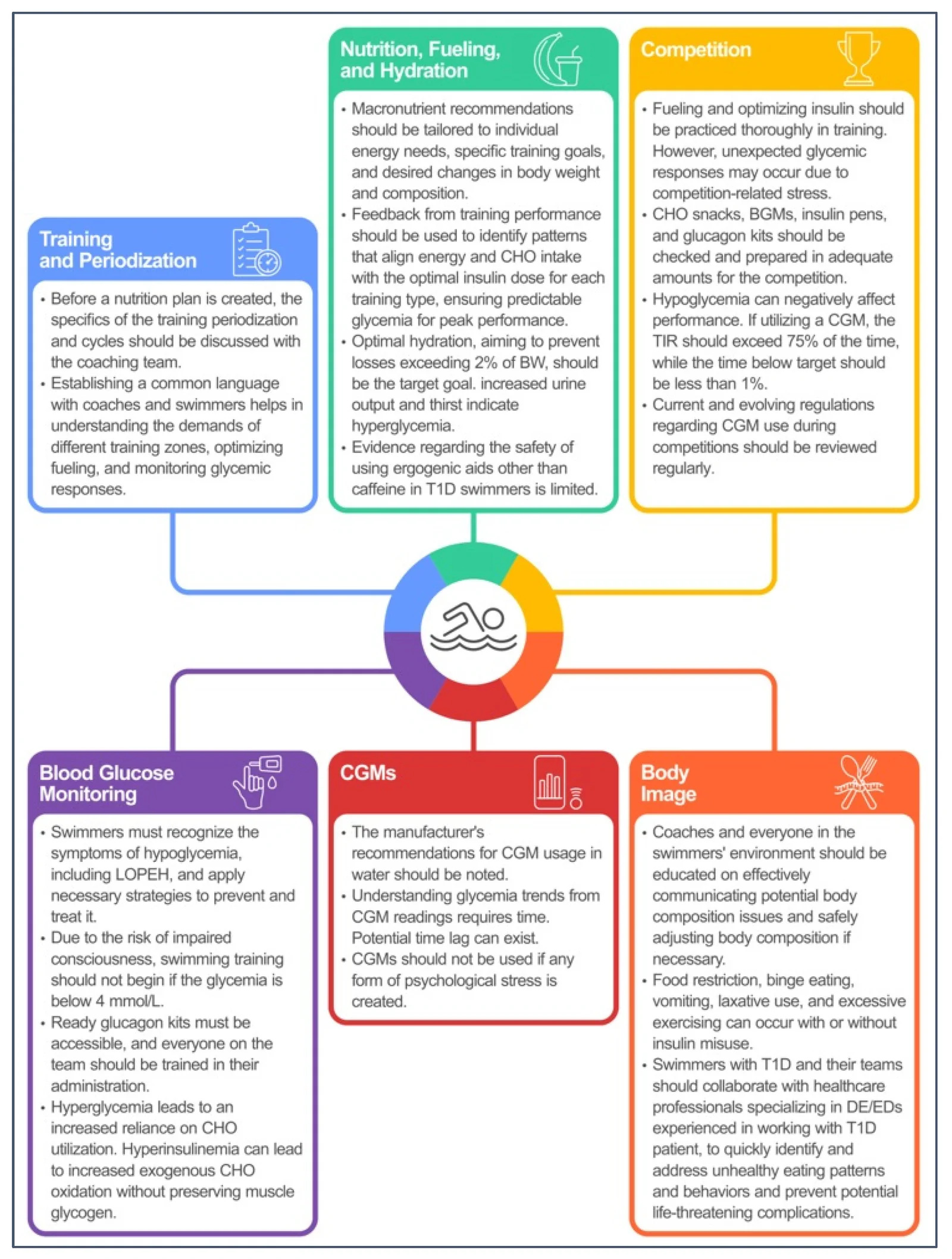
This narrative review examined nutrition, glucose monitoring, training and competition considerations for competitive swimmers with type 1 diabetes (T1D) 🔍
Here are the key takeaway messages ⬇️
Key Findings
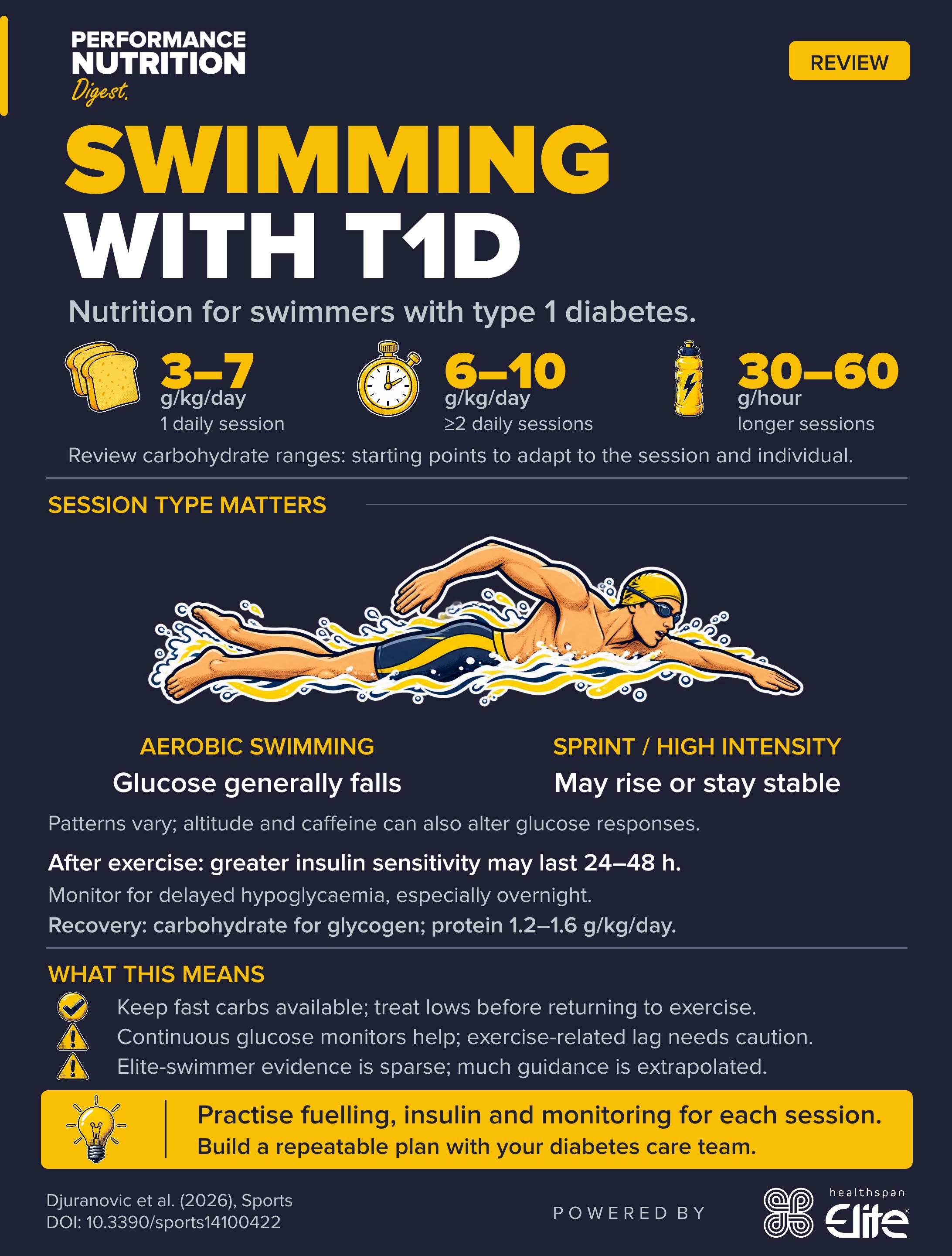
🩸 Glycaemic responses vary by session type: aerobic swimming generally lowers glucose, while anaerobic/high-intensity work may increase or stabilise it
📊 Continuous glucose monitoring (CGM) can help guide fuelling and insulin strategies, but exercise-related lag means readings should be interpreted cautiously
🍞 Carbohydrate intake should be periodised to training load: roughly 3–7 g/kg/day for one daily session and 6–10 g/kg/day with ≥2 sessions
⚡ During longer sessions, 30–60 g carbohydrate/hour may be appropriate, with higher-intensity sessions also requiring adequate pre-exercise fuelling
💉 Insulin adjustments are highly session-specific, with larger bolus reductions generally required for longer aerobic work than for sprint or resistance sessions
🌙 Enhanced insulin sensitivity can persist for 24–48 h post-exercise, increasing the risk of late and nocturnal hypoglycaemia
🥛 Post-exercise recovery should prioritise carbohydrate for glycogen restoration, alongside protein; the review suggests 1.2–1.6 g/kg/day protein
🧃 Fast-acting carbohydrate should always be available, and hypoglycaemia should be treated promptly before returning to exercise
🏔️ Altitude may increase carbohydrate oxidation and hypoglycaemia risk, requiring closer monitoring and potentially greater carbohydrate provision
☕ Caffeine may reduce the fall in glucose during exercise, but responses are unpredictable and sleep effects should also be considered
⚠️ Evidence specific to elite swimmers with T1D remains sparse, with many recommendations extrapolated from other sports and general T1D guidance
Conclusion
For swimmers with T1D, the priority is not a fixed carbohydrate or insulin formula, but repeatedly practising session-specific combinations of fuelling, insulin adjustment and glucose monitoring until responses become as predictable as possible ✅
Reference
https://pubmed.ncbi.nlm.nih.gov/42931559/

Performance Nutrition Digest is powered by Healthspan Elite ⚡️
Healthspan Elite is a science-led sports nutrition range developed in collaboration with leading experts to support athletic performance, recovery, and health.
Use code: TCDIGEST25 for 25% off at https://www.healthspanelite.co.uk/ 💪