The top 5 performance supplements and how to use them π
Invest in these strategies for performance.
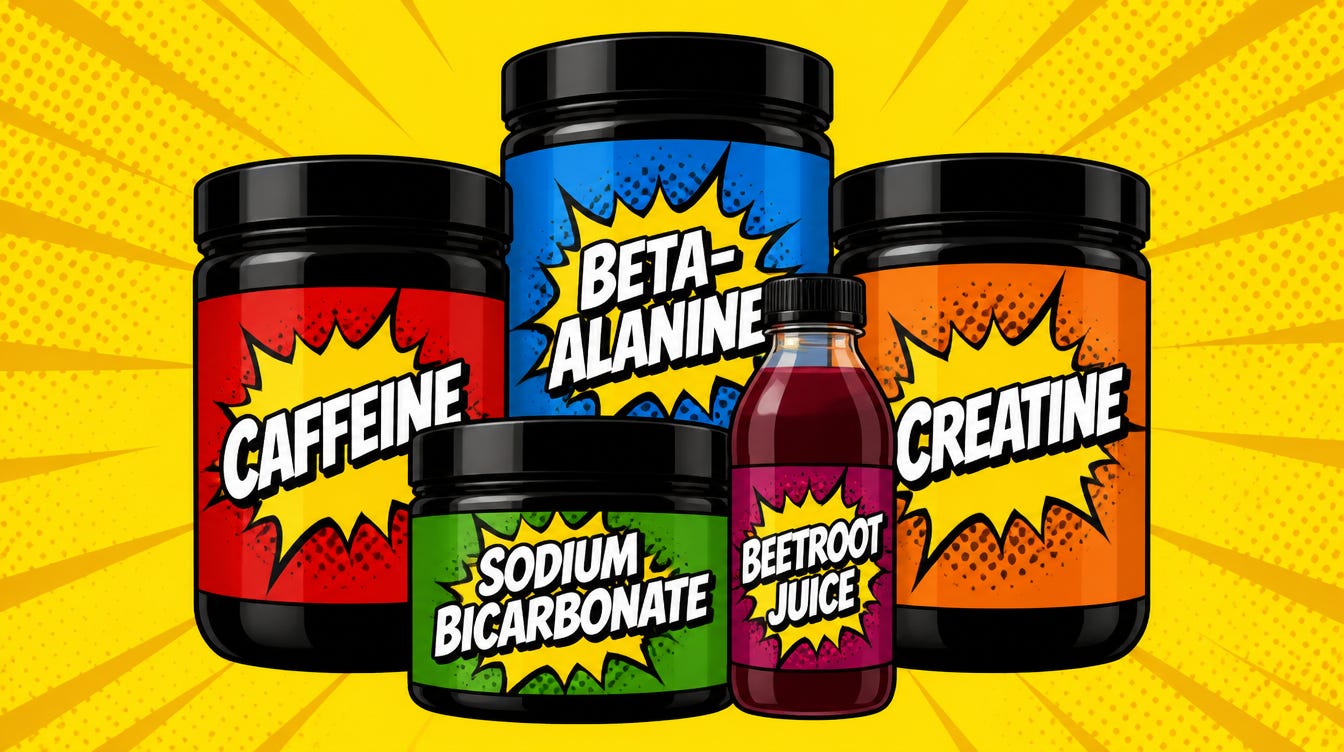
Mechanisms, Dosing Strategies, and Performance Effects of 5 Leading Ergogenic Supplements
Study Details
This new review combined evidence on 5 of the most effective and well-studies ergogenic aids and provided clear guidance on use, outcomes and limitations π
Here are the key findings β¬οΈ
Key Findings
Caffeine β
𧬠Mechanism: Adenosine receptor antagonism, increasing CNS arousal, calcium release and catecholamine activity while reducing fatigue
π Dose & timing: 3β6 mg/kg around 60 min pre-exercise
π Best evidence: Endurance exercise, intermittent high-intensity efforts and cognitive tasks
π Key outcomes: β RPE, β endurance performance, repeated-sprint ability, vigilance and reaction time
π Typical benefit: Endurance TT β2β3%; mean power β~3%; TTE β~5β12%; strength β3β5%; power β6β20%
β οΈ Limitations: High individual variability; habituation; possible GI distress, jitters and sleep disruption
Sodium bicarbonate π§
𧬠Mechanism: Increases extracellular buffering capacity, promoting H⺠efflux and helping maintain muscle excitability
π Dose & timing: 0.2β0.3 g/kg, 60β180 min pre-exercise
π£ Best evidence: High-intensity exercise lasting ~30 sβ12 min, including rowing, running, cycling and swimming
π Key outcomes: Delayed acidosis, β TTE, greater training/repetition capacity and improved middle-distance TT performance
π Typical benefit: TT β1β2%; high-intensity capacity β5β15%; open-ended cycling tests ~10%
β οΈ Limitations: GI distress is common; individual responders/nonresponders; limited benefit for <30 s or >15 min continuous efforts
Dietary nitrates π«
𧬠Mechanism: Nitrate β nitrite β nitric oxide, supporting vasodilation, oxygen delivery and mitochondrial efficiency
π Dose & timing: 8β16 mmol nitrate 2β3 h pre-exercise, or 4β16 mmol/day chronically
π΄ Best evidence: Continuous high-intensity exercise lasting ~5β30 min and some intermittent exercise
π Key outcomes: β oxygen cost of submaximal exercise, β TTE and improved TT performance
π Typical benefit: Endurance TT β1β3%; severe-intensity TTE β10β16%; submaximal Oβ cost β~3β5%
β οΈ Limitations: Smaller effects in elite athletes; avoid antibacterial mouthwash
Creatine πͺ
𧬠Mechanism: Increases phosphocreatine availability and ATP resynthesis, with potential benefits for glycogen storage, cell hydration and anabolic signalling
π Dose & timing: 20 g/day for 5β7 days then 3β5 g/day, or ~0.3 g/kg/day loading
ποΈ Best evidence: Short-duration, repeated high-intensity efforts, sprinting, team sports and resistance training
π Key outcomes: β strength, power, lean mass and repeated-sprint ability; faster recovery
π Typical benefit: Strength β5β15%; lean mass β~1β1.5 kg; repeated-sprint ability β~5β15%; peak power β~3β8%
β οΈ Limitations: Small increases in body mass may disadvantage some weight-bearing endurance activities; individual response varies
Ξ²-Alanine π«¨
𧬠Mechanism: Increases intramuscular carnosine, improving buffering of H⺠during high-intensity exercise
π Dose & timing: 3.2β6.4 g/day for β₯4 weeks, divided into smaller doses
π Best evidence: High-intensity efforts lasting ~1β4 min and repeated sprint intervals
π Key outcomes: Delayed fatigue, β TTE and improved repeated-bout performance
π Typical benefit: 1β4 min efforts β~2β3%; median improvement across studies ~2.85%
β οΈ Limitations: Minimal effects for efforts <60 s or >10 min; larger individual doses can cause paraesthesia
Reference
Performance Nutrition Digest is powered by Healthspan Elite β‘οΈ
Healthspan Elite is a science-led sports nutrition range developed in collaboration with leading experts to support athletic performance, recovery, and health.
Use code: TCDIGEST25 for 25% off at https://www.healthspanelite.co.uk/ πͺ